The Australian Photoaging Report shows that Australia has a blind spot when it comes to sun damage and skin health, which has an unexpected mental cost.
4 min read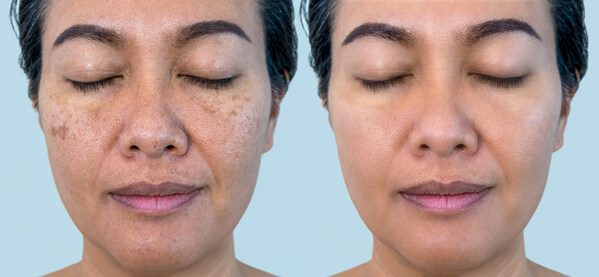
Before / After treatment pigmentation (Credit: Praewphan - stock.adobe.com)
Asian Aussie Business | The first Re.Think Skin: Australian Photoageing Re.Port shows that up to 80% of visible skin aging is caused by sun exposure, but 60% of Australians don’t know this. [1] The nationwide YouGov survey, which was paid for by iNova Pharmaceuticals with help from the Australasian Society of Cosmetic Dermatologists (ASCD), shows that more people need to know about and take care of photoageing, which is the early aging of skin caused by exposure to the sun[2]. This is needed to deal with both the physical and mental effects of sun-damaged skin.
The poll of 1,565 Australians showed that people of different generations have very different levels of knowledge and feelings about photoaging. Photoaging speeds up the skin’s natural aging process and causes changes that make the skin look older than it really is. [2,3]
One in four Australians have never heard of the word “photoageing.”
Younger Australians (Gen Z) are less likely to know that sun exposure makes faces look older than older groups.
Men are less likely than women to realize that sun exposure is the main cause of aging in the face.
Photoaging has a big effect on your mental health:
Two-thirds (66%) say that signs of aging on the face make them look older than they are.
62% say signs of aging on their faces make them feel less confident.
57% are worried about the signs of aging on their faces
Younger Australians (Gen Z and Millennials) are more worried and stressed about signs of aging on the face than older groups.
People are very aware of the risks of sun damage, but they don’t do much to avoid it:
Nearly nine out of ten Australians know that the sun can hurt their skin, but less than one in five always wear sunscreen or clothes that protect them.
Only 13% of people always put sunscreen on their faces when they go outside.
Younger people are more likely to have false ideas about sunscreen.
This finding fits with what a previous study in Queensland found: that up to 80% of people aged 20 to 54 who took part had signs of photoaging.
Some reasons why people don’t get photoaging treatment are:
Cost worries (64% of those who answered)
32% were worried about possible side effects.
29 percent said they didn’t know about their treatment choices
Only 46% would see a doctor about photoaging signs.
Professor Greg Goodman AM, President of the Australasian Society of Cosmetic Dermatologists, said, “The Australian Photoageing Report brings to light issues that have been raised in previous reports. For example, Australian women show signs of facial aging up to 20 years earlier than women in the US [4], which makes this a very important health issue for our population.”
“We understand how important this survey is for making people in Australia more aware of photoaging and how it affects skin health and well-being.” “Australians should make it a priority to talk to their doctors about their skin health in order to help deal with the visible and mental effects of photoaging,” Professor Goodman stated.
“The Australian Photoageing Report shows that people need to know more about how sun exposure affects skin aging and mental health,” said Temi Stavroulakis, Director of Medical and Regulatory Affairs ANZ at iNova Pharmaceuticals. “By shedding light on these findings, we aim to empower Australians to take proactive steps in protecting their skin health and wellbeing.”
List of References
One study by Flament F et al. looked at how the sun affects the obvious signs of aging in Caucasian skin. 2012;6(2):222–232 in Clin Cosmet Investig Dermatol.
2. The Australasian College of Dermatologists. Skin that is getting old. The website https://www.dermcoll.edu.au/atoz/aging-skin was visited in November 2024.
3. The Canadian Association of Dermatologists. Light aging. Dermatology.ca/public-patients/skin/photoaging (viewed November 20, 2024).
A study by Goodman GJ et al. compared how women in Australia, the USA, the UK, and Canada said they saw signs of aging on their faces. Australas J Dermatol. 2017;59(2):108–117 in English.
5. Green AC, Hughes MC, McBride P, and Fourtanier A. Factors linked to photoaging (skin aging before age 55) in a population-based study. In 2011, Dermatology 222(1):74–80.
Some facts about the Australian Photoaging Re.port: Based on an online poll by YouGov Plc from October 9th to October 15th, 2024, which included 1,565 Australians aged 18 and up, the report was made. The data was weighted so that it would be typical of the people in Australia. You can read the whole study at www.rethinkskin.com.au/resources.
Notes on iNova Pharmaceuticals:
iNova Pharmaceuticals is a leader in better health because they are always looking for new, useful ways to make people’s health and well-being better in their daily lives.
These are some of the best consumer health brands and prescription drugs on the market. They are backed by science and help with things like sore throats, coughs, colds and flu, skin health and sun protection, pain management, wound care, weight management, and natural health vitamins. Our company is based in Singapore, but our goods are sold in more than 75 markets in Asia, Australia, New Zealand, the Middle East and Africa, and Europe.
Visit www.inovapharma.com.au to find out more.
The Australasian Society of Cosmetic Dermatologists (ASCD) is an organization that:
The Australasian Society of Cosmetic Dermatologists (ASCD) is a professional group that works to improve cosmetic and surgical dermatology. It is known all over the world. The ASCD improves business knowledge, leads to new ideas, and improves patient care through education.
Visit www.ascd.org.au to find out more.
Source: iNova Pharmaceuticals